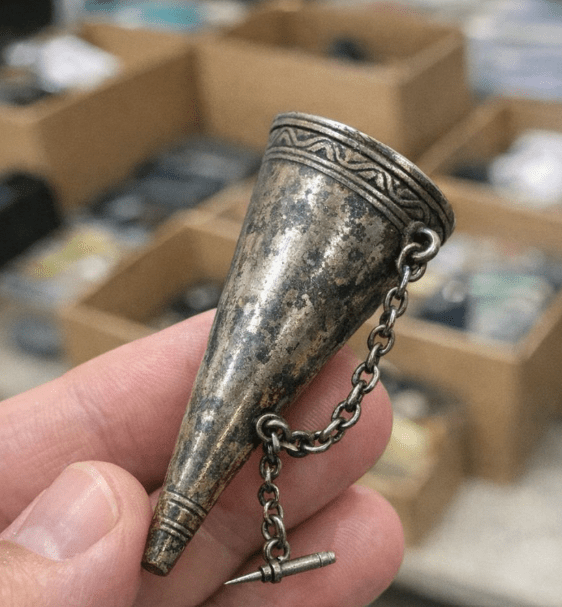

Rummage sales often hold unexpected treasures, and occasionally, a single curious object can open the door to an entire chapter of history. One such discovery—a small, ornate metal cone with a delicate chain, pin, and a folding tripod handle—may appear puzzling at first glance. However, a closer look reveals that this intriguing piece is far more than decorative; it is a glimpse into the elegance and social customs of the Victorian era.
What Is This Mysterious Object?
The item described is most likely a Victorian posy holder, also known as a tussie-mussie or bouquet holder. Typically measuring just a few inches tall, these cone-shaped vessels were crafted to hold small arrangements of fresh flowers. Often made of silver or similarly refined metals, they were adorned with intricate engravings, floral motifs, and occasionally gemstones—reflecting the ornate design sensibilities of the 19th century.
The presence of a chain and pin allowed the holder to be secured to a dress or carried gracefully, while the folding tripod stand enabled it to be displayed upright on a table when not in use. These thoughtful features highlight the blend of beauty and practicality that defined many Victorian accessories.
A Symbol of Elegance and Social Ritual
During the Victorian era (1837–1901), social interactions were often guided by subtle gestures and symbolic communication. Flowers played a central role in this system, commonly referred to as the language of flowers, where each bloom conveyed a specific sentiment—love, admiration, friendship, or even rejection.
Posy holders became essential accessories for women attending dances, social gatherings, and formal events. Admirers would present small bouquets, and the recipient would place them into her posy holder, keeping them fresh with a small water reservoir inside. Beyond practicality, these holders became visible symbols of attention and affection, adding a layer of quiet communication to social life.
Craftsmanship and Design
Authentic Victorian posy holders showcase exceptional craftsmanship. Artisans employed techniques such as engraving, embossing, and filigree to create detailed patterns—often inspired by nature, including vines, leaves, and blossoms.
Common materials included:
- Sterling silver (often marked with “925” or hallmarks)
- Gold or gold-plated metals
- Brass or other base metals for more affordable versions
Each piece was unique, often reflecting the personal taste and social standing of its owner. The intricate artistry and delicate construction are key indicators of authenticity.
How to Identify an Authentic Piece
If you believe you’ve found a genuine Victorian posy holder, there are a few important steps to confirm its authenticity:
- Check for hallmarks or maker’s marks: These stamps can reveal the origin, metal content, and sometimes the exact maker.
- Examine the craftsmanship: Fine detailing and precise engravings are hallmarks of Victorian-era work.
- Inspect functionality: The chain, pin, and folding stand should operate smoothly, even with age-related wear.
- Assess overall condition: Natural tarnishing and minor wear are expected, but the structure should remain intact.
Care and Preservation
As a delicate antique, a posy holder requires careful handling:
- Clean gently with a non-abrasive silver polish and a soft cloth
- Avoid soaking in water, especially if internal components remain
- Store or display in a dry, low-humidity environment
- Use a glass case for protection while showcasing its beauty
For display, consider pairing it with dried or artificial flowers to reflect its original purpose without risking damage.
Value and Collectibility
The market value of a Victorian posy holder can vary widely depending on material, craftsmanship, rarity, and condition. Sterling silver examples, particularly those with identifiable maker’s marks, can range from approximately $100 to several hundred dollars or more. Rare or especially ornate pieces may command higher prices among collectors of Victorian antiques.
A Lasting Fascination
Objects like the Victorian posy holder continue to captivate modern audiences because they embody a time when beauty, symbolism, and craftsmanship were deeply intertwined with everyday life. They serve as tangible reminders of an era when emotions were expressed through thoughtful gestures and carefully chosen details.
In today’s fast-paced, digital world, such artifacts offer a refreshing connection to a slower, more intentional way of living—one where even a small bouquet, elegantly carried, could speak volumes.