
Oven-Baked 4-Ingredient Wedding Soup Pasta (Grandma’s Easter Casserole, Made Simple)
Every grandmother has that one dish. The one where the whole house goes quiet for a moment when it comes out of the oven. The one that appears at every Easter Sunday, every holiday table, every church potluck — and always gets scraped completely clean before anyone thinks to save leftovers. This oven-baked 4-ingredient wedding soup pasta is that dish. Built on the soul of classic Italian wedding soup and stretched into a hearty, stick-to-your-ribs casserole bake, it feeds a crowd from a single white casserole dish and requires almost no effort to produce.
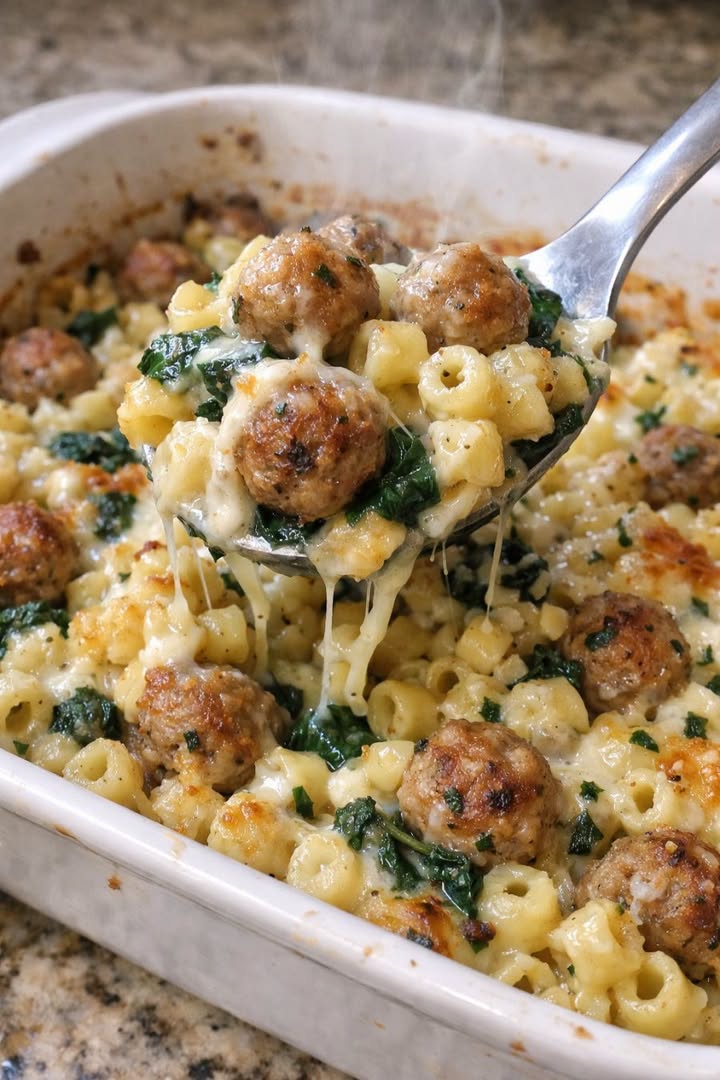
Dry pasta. A jar of chicken broth–based pasta sauce. Frozen mini meatballs. Fresh baby spinach. Those four ingredients go into the pan in layers — no pre-cooking, no separate pots, no standing at the stove. The foil goes on tight, the oven does the work, and what comes out forty-five minutes later is bubbling, fragrant, deeply satisfying, and exactly the kind of Sunday supper that makes people linger long after the dishes are cleared.
Keep it simple. Do not skimp on the meatballs. Let the oven do the work. Grandmother’s rules, and she was right every single time.
Why This Wedding Soup Pasta Casserole Earns a Place at Every Holiday Table
- Only 4 ingredients — dry pasta, a jar of brothy pasta sauce, frozen mini meatballs, and fresh baby spinach. Pantry and freezer staples that come together into something genuinely special.
- No pre-cooking the pasta. The dry pasta goes straight into the casserole dish, where it absorbs the brothy sauce during baking and becomes perfectly tender — no boiling, no draining, no extra pot to wash.
- One casserole dish, minimal cleanup, and a dish that travels to any gathering looking exactly as beautiful as when it left the oven.
- Feeds 6 people generously and scales effortlessly to a larger gathering by moving up to a bigger pan and increasing the ingredients proportionally.
- The spinach melts into the dish during baking — becoming silky, deep green, and almost invisible to the pickiest eaters at the table while adding genuine nutrition to every serving.
- Make-ahead friendly. Assemble the casserole a few hours before baking, cover, and refrigerate. Slide it into the oven when you are ready, adding 5 to 10 extra minutes to the bake time to account for the cold start.
Ingredients
Serves 6
- 12 oz small dry pasta (ditalini, small shells, elbow macaroni, or orzo)
- 24 oz jar good-quality chicken broth–based pasta sauce or soup base (brothy in consistency, not thick tomato sauce)
- 16 oz frozen fully cooked mini meatballs
- 4 packed cups fresh baby spinach, roughly chopped
On the sauce: The liquid is everything in this recipe — it is what cooks the dry pasta and becomes the brothy, savory base of the finished casserole. Look for a chicken broth–based pasta sauce or a brothy Italian-style soup base rather than a thick tomato or marinara sauce. The liquid needs to be thin enough to fully hydrate the pasta during baking. If your sauce looks very thick in the jar, whisk in ½ cup of additional chicken broth before pouring it over the pasta.
On the pasta shape: Small pasta shapes work best here because they cook evenly in the available liquid and every serving gets a good ratio of pasta, meatballs, and spinach. Ditalini is the most traditional choice for wedding soup. Small shells, elbow macaroni, orzo, and acini di pepe all work beautifully — just note that very tiny shapes like acini di pepe may become tender a few minutes earlier than the longer end of the bake time range.
On the meatballs: Use fully cooked frozen mini meatballs straight from the bag — they go into the casserole frozen with no thawing required. If you prefer to use homemade meatballs, make sure they are fully cooked to an internal temperature of 165°F (74°C) before assembling the casserole. Never place raw or undercooked meatballs directly into a casserole that bakes at this temperature for this amount of time.
Step-by-Step Instructions
Step 1: Preheat and Prepare the Dish
Preheat your oven to 375°F (190°C). Lightly grease a 9×13-inch casserole dish — white ceramic or glass is ideal for gentle, even heat distribution. Set aside within easy reach, as the assembly moves quickly.
Step 2: Add the Dry Pasta
Scatter the dry pasta evenly over the bottom of the greased casserole dish. Do not cook the pasta ahead of time — this is the step that saves you a pot and a significant amount of time. The pasta will absorb the brothy sauce and become perfectly tender in the oven, emerging with a texture and flavor it would not have if boiled separately first.
Step 3: Pour Over the Sauce
Pour the chicken broth–based pasta sauce evenly over the dry pasta, using the back of a spoon or a spatula to nudge the liquid into the corners of the dish so no pasta is sitting completely exposed and dry. Every piece of dry pasta should be touching liquid. If any sections look dry, pour a small splash of additional chicken broth over those areas before proceeding.
Step 4: Add the Meatballs
Tuck the frozen mini meatballs down into the pasta and sauce in a single, reasonably even layer. They do not need to be positioned perfectly — the goal is simply to distribute them so that every serving spoonful will capture a few. They will heat through completely during baking directly from frozen.
Step 5: Add the Spinach
Scatter the roughly chopped baby spinach evenly over the top of the pasta and meatballs. It will look like an enormous amount of spinach — almost too much. This is correct and expected. Spinach shrinks dramatically in the oven heat, cooking down to a fraction of its raw volume and becoming silky, deep green strands woven throughout the casserole by the time it comes out.
Step 6: Cover Tightly and Bake
Cover the casserole dish very tightly with aluminum foil — press it firmly around all four edges of the dish. The sealed foil is the mechanism that makes this entire recipe work: it traps the steam from the brothy sauce and creates a humid, even cooking environment that hydrates and cooks the dry pasta from the inside out. A loose seal allows steam to escape, which can result in unevenly cooked, partially dry pasta. Bake covered on the middle oven rack for 35 to 40 minutes, until the pasta is just tender when a fork is pushed down through the center of the casserole.
Step 7: Uncover, Stir, and Finish Baking
Carefully remove the foil — stand back slightly as you peel it away, as the trapped steam will be very hot. Give the casserole a gentle stir from the edges toward the center to incorporate any pooled liquid and redistribute the pasta, meatballs, and spinach. If the casserole looks slightly dry at this point, add a few tablespoons of warm chicken broth or water and stir it in. Return the dish, uncovered, to the oven and bake for another 5 to 10 minutes, until the top is lightly golden in spots and the casserole is bubbling actively around the edges.
Step 8: Rest and Serve
Remove the casserole from the oven and allow it to rest on the counter for 5 to 10 minutes before serving. This brief rest allows the pasta to settle and the liquid to be absorbed evenly throughout the dish, producing clean, generous servings of tender pasta, golden meatballs, and silky spinach rather than a pool of liquid in the bottom of the bowl. Serve with a large spoon directly from the casserole dish.
Pro Tips for the Perfect Wedding Soup Pasta Casserole
- Seal the foil tightly — this is the most important step. The foil seal creates the steam environment that cooks the dry pasta. A loose or poorly sealed foil cover lets that steam escape and leaves you with unevenly cooked or crunchy pasta. Press it firmly against all four edges before the dish goes into the oven.
- Check for liquid before sealing. Before covering the dish, look across the surface from eye level. Every section of pasta should appear wet and saucy. Any dry patches will not cook through properly. Add a small splash of chicken broth to any dry areas before sealing.
- Use fully cooked frozen meatballs — never raw. The bake time and temperature in this recipe are calibrated for fully cooked frozen meatballs that simply need to be heated through. Raw or undercooked meatballs may not reach a safe internal temperature of 165°F (74°C) during the casserole bake. If using homemade meatballs, cook them through completely before assembling the dish.
- Do not panic about the amount of spinach. Four packed cups of raw spinach looks like far too much every single time. It is not. Spinach cooks down to a fraction of its raw volume, and the finished dish will have exactly the right proportion of silky green strands woven through the pasta and meatballs.
- Add broth if the casserole looks dry after uncovering. Different pasta shapes, different sauce brands, and different oven temperatures all affect how much liquid is absorbed during the covered bake. If the casserole looks dry when you remove the foil, a few tablespoons of warm broth or water stirred in before the final uncovered bake will restore the right consistency.
- Rest before serving, every time. The 5 to 10 minutes of resting time is what separates a beautiful, cohesive casserole from a soupy one. The pasta continues absorbing liquid during the rest period and the dish settles into itself — do not skip it.
Serving Suggestions
This casserole is a complete meal in a dish, but a few simple companions make it feel like a proper Sunday supper:
- A simple green salad with red wine vinegar and olive oil — Crisp, lightly dressed greens provide freshness and acidity that balances the richness of the brothy, meaty casserole perfectly. This is the pairing that makes the whole table feel complete.
- Warm dinner rolls or buttered garlic toast — For catching every last drop of the savory broth at the bottom of the bowl. Non-negotiable for anyone who appreciates good bread alongside a brothy bake.
- A basket of crusty Italian bread — For a more authentic Italian wedding soup experience at the table, a loaf of good crusty bread for tearing and dipping is the natural companion.
- Roasted carrots or green beans — A simple tray of roasted vegetables alongside stretches the meal easily for a larger gathering without adding any complexity to the main dish.
- Grated Parmesan or Romano at the table — A bowl of freshly grated hard cheese for serving allows everyone to season their own portion — a simple touch that makes the dish feel more intentional and restaurant-quality.
- For dessert: Something simple and light — lemon bars, store-bought angel food cake with fresh berries, or a bowl of seasonal fruit keeps the meal feeling like the kind of unhurried Sunday supper that deserves a relaxed finish.
Easy Variations to Try
- Soupier version: After baking, stir in 1 to 2 cups of hot chicken broth to loosen the casserole into something closer to a thick, brothy soup served over pasta — more like the original Italian wedding soup in consistency. This is particularly good served in deep bowls with crusty bread.
- Parmesan crust: Before the final 5 to 10 minutes of uncovered baking, scatter a generous handful of freshly grated Parmesan or Pecorino Romano over the top of the casserole. It melts and browns into a salty, nutty crust that makes every serving more interesting.
- Add vegetables: Fold a cup of frozen peas, diced carrots, or chopped zucchini into the pasta layer before covering and baking for extra color and nutrition throughout the dish.
- Different pasta shapes: Ditalini is the traditional choice for wedding soup, but any small pasta works beautifully — small shells, elbow macaroni, acini di pepe, orzo, or even pastina. Keep an eye on very tiny shapes, which may become tender a few minutes earlier than larger ones.
- Homemade meatballs: If you prefer to make your own, use a classic Italian-style mixture of ground beef and pork, seasoned with garlic, Parmesan, and fresh parsley. Roll them small — about the size of a large marble — and bake or pan-fry them fully to 165°F (74°C) before adding to the casserole.
- Leaner version: Use frozen turkey meatballs in place of traditional beef and pork meatballs for a lighter result that still carries excellent flavor with the brothy sauce.
Storing and Reheating Leftovers
Allow the casserole to cool slightly, then cover tightly or transfer to airtight containers and refrigerate within 2 hours of baking. Store for up to 3 to 4 days. The pasta will absorb the remaining broth during storage and the casserole will thicken considerably when cold — this is normal. To reheat, add a generous splash of chicken broth or water to the portion before warming, stir gently, and heat in the microwave in 60-second intervals until steaming hot throughout, or warm in a covered skillet over low heat with the added liquid. Individual portions reheat beautifully and taste just as good as the original — some people prefer it the next day when everything has had time to fully meld together.
The Bottom Line
This oven-baked 4-ingredient wedding soup pasta is the kind of recipe that earns its place at the holiday table not because it is technically impressive but because it is genuinely, deeply satisfying in the way only the best simple food ever is. Four pantry and freezer staples. One casserole dish. Under an hour from assembly to table. And a result that bubbles and steams and smells like every good memory you have of a Sunday dinner that someone made because they wanted to feed you something real.
Keep it simple. Do not skimp on the meatballs. Let the oven do the work.
Grandmother knew exactly what she was doing. And now, so do you.
Four ingredients. One casserole dish. The Easter Sunday supper that belongs at every holiday table, every year, without exception.