
Amish Tomato Macaroni Bake (4 Ingredients, One Dish & Pure Pantry Magic)
There is a whole chapter of American cooking that never made it into glossy cookbooks or food magazines — the chapter written in church basement kitchens and spiral-bound small-town cookbooks, where the goal was always to feed a table full of people something warm and honest using whatever was already in the pantry. This Amish tomato macaroni bake comes directly from that tradition. Dry elbow macaroni. Two cans of diced tomatoes. Water. Salt. That is the entire ingredient list — and somehow, from those four things, the oven produces a bubbling, saucy, deeply satisfying bake that fills the house with a tomatoey, homey smell and puts everyone in a better mood before it even hits the table.
No browning, no boiling, no standing at the stove. Everything goes into a glass casserole dish in layers, the foil goes on tight, and the oven handles the rest. It is the kind of recipe that should not work as well as it does — and yet it is one of the most reliably satisfying, budget-friendly dinners you will ever pull out of the oven. Kid-approved, crowd-pleasing, and deeply, comfortably Midwestern in the very best way.
Why This Tomato Macaroni Bake Deserves a Permanent Spot in Your Weeknight Rotation
- Only 4 ingredients — dry elbow macaroni, canned diced tomatoes, water, and salt. All of them pantry staples that most kitchens already have.
- No pre-cooking anything. The pasta goes in dry, the tomatoes and water go over the top, and the oven does the rest. One dish, one step, minimal effort.
- Genuinely budget-friendly. This is one of the most affordable hot, filling, homemade dinners it is possible to make — a complete bake for a family of four to six that costs next to nothing.
- The oven does remarkable things to canned diced tomatoes and dry pasta cooked together. The tomato juices concentrate, the pasta absorbs them, and the result tastes more complex and intentional than four ingredients have any business producing.
- Scales easily. Double the recipe in a 9×13-inch dish and bake for a potluck or family gathering with almost no additional effort.
- Invites every variation. Stir in browned ground beef, sprinkle cheese on top, add Italian seasoning — the four-ingredient base is a perfect, forgiving canvas that works with whatever you have on hand.
Ingredients
Serves 4 to 6
- 2 cups dry elbow macaroni, uncooked
- 2 cans (14.5 oz each) diced tomatoes, undrained
- 2 cups water
- 1½ teaspoons salt
On the tomatoes: Use the tomatoes undrained — the juice in the can is as important as the tomatoes themselves. It is the primary cooking liquid that hydrates the dry pasta and becomes the savory, concentrated sauce that coats every elbow of macaroni by the time it comes out of the oven. Fire-roasted diced tomatoes are a particularly good choice here if you can find them — the smokiness they add deepens the flavor of the finished bake considerably without any extra work.
On the water: The water works together with the tomato juice to provide sufficient liquid for the pasta to fully hydrate and cook through during the bake. The ratio is calibrated specifically for 2 cups of dry elbow macaroni. If you prefer a saucier result, add an extra ½ cup of water before covering the dish. If you prefer a drier, more pasta-forward bake, reduce the water by ¼ cup and allow the dish to rest a few extra minutes after baking before serving.
Step-by-Step Instructions
Step 1: Preheat and Prepare the Dish
Preheat your oven to 375°F (190°C). Lightly grease a 2 to 2½-quart glass casserole dish with butter or nonstick cooking spray. Glass is the preferred material here — it distributes heat gently and evenly, which is ideal for cooking dry pasta in liquid without scorching the bottom, and it allows you to see the sauce bubbling at the sides so you know when everything is progressing correctly.
Step 2: Add the Dry Macaroni
Pour the dry elbow macaroni into the bottom of the prepared casserole dish and spread it into as even a layer as possible. The pasta goes in completely dry — no soaking, no rinsing, no pre-cooking. This is the technique that makes the whole recipe work: the dry pasta slowly absorbs the tomato-flavored liquid during baking, becoming tender from the inside out and carrying the tomato flavor deep into every noodle.
Step 3: Season
Sprinkle the salt evenly over the dry macaroni. Seasoning the pasta directly before adding liquid ensures the salt is distributed throughout the dish from the start, rather than sitting only in the sauce at the top.
Step 4: Add the Tomatoes
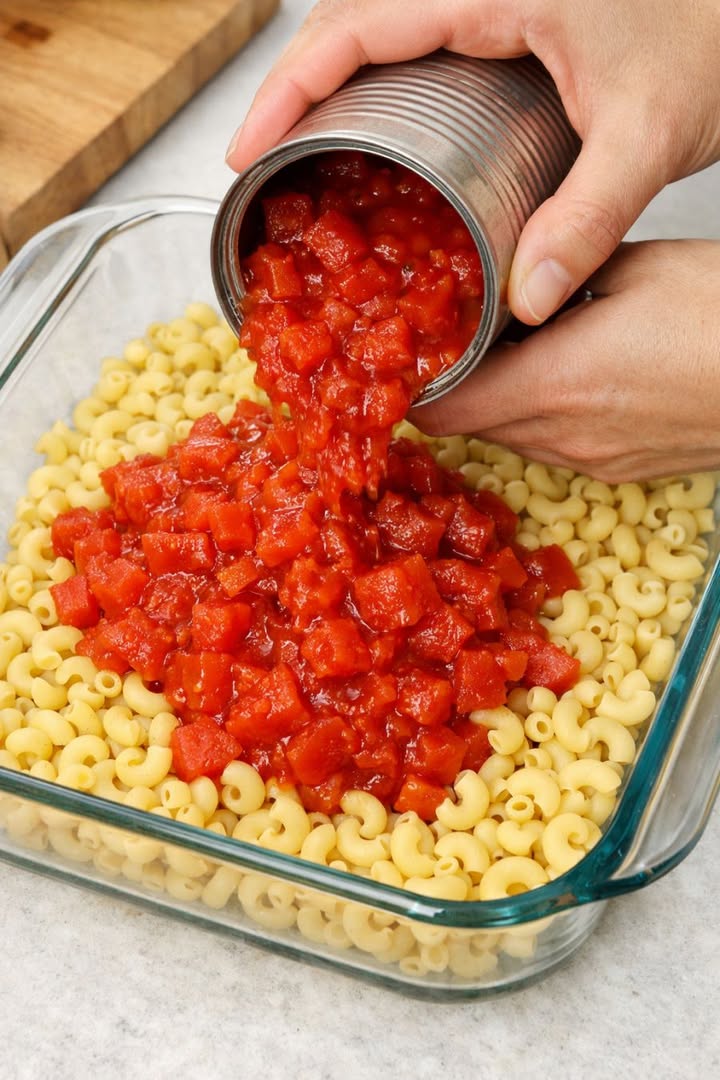
Open both cans of diced tomatoes and pour them — juice and all — evenly over the dry seasoned macaroni. Distribute the tomatoes across the entire surface of the dish so the coverage is relatively even. The tomatoes and their juice together form the primary cooking liquid and the eventual sauce.
Step 5: Add the Water
Pour the water evenly over the tomatoes and pasta. Use the back of a spoon to gently press any exposed macaroni pieces down into the liquid so they have contact with cooking liquid from the start. Do not worry if a few pieces remain slightly above the surface — they will steam cook from the heat trapped under the foil.
Step 6: Cover and Bake
Cover the casserole dish very tightly with aluminum foil, pressing the edges firmly against the dish to create as close to a sealed environment as possible. The sealed foil traps steam inside the dish — this is the mechanism that actually cooks the dry pasta through. A loosely covered or poorly sealed dish lets steam escape, which can result in pasta that is still hard in the center even after the full bake time. Bake covered on the middle rack for 35 to 40 minutes.
Step 7: Check and Stir
Carefully remove the foil from the oven — stand back slightly as you peel it back, as the trapped steam will be very hot. Test the macaroni by biting into a piece from the center of the dish. It should be fully tender with no chalky or firm center. If it still has resistance, re-cover and return to the oven for 5 more minutes. Once tender, stir the casserole well from the bottom up, combining the concentrated tomatoes on top with the pasta below. If the bake looks a little looser and saucier than you like, allow it to sit uncovered on the counter for 5 to 10 minutes — the sauce thickens noticeably as it stands and the pasta continues to absorb liquid as it cools. Taste and adjust salt if needed.
Step 8: Serve
Serve warm directly from the glass casserole dish with a large spoon, scooping from the bottom of the dish to make sure each serving gets both the concentrated tomato sauce and the tender macaroni throughout.
Pro Tips for the Perfect Tomato Macaroni Bake
- Seal the foil as tightly as possible. This is the single most important technique step in the recipe. The steam trapped inside the sealed dish is what cooks the dry pasta through during the bake. A loose or poorly sealed foil cover allows steam to escape, leaving pasta that is undercooked in the center even after the full time. Press the foil firmly against all four edges of the dish before it goes into the oven.
- Never drain the canned tomatoes. The instruction to use the tomatoes undrained is not a suggestion — it is a structural part of the recipe. The tomato juice is a significant portion of the cooking liquid. Drained tomatoes with only 2 cups of water will not produce enough liquid to fully cook the dry pasta.
- Use glass, not dark metal. Dark metal pans absorb heat aggressively and can cause the bottom layer of pasta to cook faster than the top, producing unevenly cooked results. Glass conducts heat gently and allows you to monitor the sauce level through the sides of the dish.
- Test the pasta before removing the foil for good. Bite into a piece from the center of the dish — the center is always the last to cook through. If it is still firm, the foil goes back on and the dish returns to the oven. This single test prevents serving undercooked pasta.
- Let it rest before serving. The sauce thickens considerably in the 5 to 10 minutes after the dish comes out of the oven. Pasta served immediately after baking can seem loose and watery — pasta served after a brief rest will be saucy, cohesive, and perfectly textured.
- Add a splash of water when reheating. The pasta continues to absorb the sauce during storage and the bake will seem dry when cold. A splash of water stirred in before reheating revives the sauce and the dish comes back to almost exactly its original texture and consistency.
Serving Suggestions
This is humble, honest food that pairs best with simple, honest sides:
- A simple green salad — Crisp greens with a light vinaigrette provide freshness and acidity that balance the warm, starchy, tomatoey bake without competing with it.
- Steamed green beans or buttered peas — A simple cooked green vegetable alongside adds color, nutrition, and a gentle sweetness that plays well against the bright tomato flavor.
- Garlic bread or buttered toast — For swiping up the saucy tomato-pasta from the bottom of the bowl. One of the best simple pairings in comfort food cooking.
- Sliced cucumbers with ranch dressing — Cool, crunchy cucumbers alongside the warm, saucy bake is a very Midwestern combination that is refreshing and completely satisfying at the same time.
- A bowl of cottage cheese — A deeply Midwestern accompaniment that sounds unexpected and tastes exactly right alongside a tomato and pasta bake. The cool, mild creaminess is a genuinely wonderful contrast.
Easy Variations to Try
- Butter finish for picky eaters: Stir 1 to 2 tablespoons of cold unsalted butter into the finished bake right after removing it from the oven. The butter melts into the sauce and softens the tomato flavor into something creamier and more mild — very popular with children who find straight canned tomato flavor too sharp.
- Add Italian seasoning: Stir 1 teaspoon of dried Italian seasoning or dried basil into the dish with the salt before baking. The herbs bloom during the long oven cook and make the whole bake smell and taste like something from a much more ambitious recipe.
- Cheesy tomato mac: After removing the foil and stirring the casserole, scatter 1 to 1½ cups of shredded cheddar or mozzarella over the top and return the dish, uncovered, to the oven for 5 to 10 minutes until the cheese is melted and just beginning to brown in spots. This is the version that earns the most enthusiastic table reactions.
- Meat version: Stir 1 to 2 cups of cooked crumbled ground beef, browned Italian sausage, or shredded rotisserie chicken into the bake after the initial covered cook. Return the dish to the oven, uncovered, for 5 to 10 minutes to heat the meat through. A complete, protein-rich dinner from the same simple base.
- Fire-roasted tomato version: Substitute fire-roasted diced tomatoes for regular diced tomatoes. The smoky, slightly caramelized character of fire-roasted tomatoes adds remarkable depth to the finished bake and is the single easiest upgrade available.
- Double batch for a crowd: Use a 9×13-inch casserole dish, double all four ingredients, and increase the bake time by 5 to 10 minutes. Check the pasta in the center for tenderness before removing the foil for the final time.
Storing and Reheating Leftovers
Cover the casserole dish tightly or transfer leftovers to airtight containers and refrigerate within 2 hours of baking. Store for up to 3 to 4 days. The pasta will absorb nearly all of the remaining sauce during storage — the bake will look very dry and dense when cold. This is normal and entirely fixable. Before reheating, stir in a generous splash of water (about ¼ to ½ cup, depending on the portion size) and stir it gently into the pasta. Reheat in the microwave in covered 60-second intervals, stirring between each, until steaming hot throughout — or warm in a covered skillet over low heat with the added water, stirring gently. The sauce will reconstitute beautifully and the reheated bake will taste remarkably close to the original.
The Bottom Line
This Amish tomato macaroni bake is the kind of recipe that belongs in every home cook’s permanent repertoire — not because it is impressive or technically demanding, but because it is exactly what it needs to be. Four pantry ingredients. One glass casserole dish. Forty minutes in the oven. And a warm, tomatoey, honest, deeply satisfying bake that fills the kitchen with a smell that says dinner is ready and it is going to be good.
It is the recipe from the spiral-bound church cookbook that no one wrote down because everyone just knew it. The one that costs almost nothing and tastes like something worth going back for seconds of. The one that fits a Tuesday night as naturally as it fits an Easter Sunday potluck table.
Make it once. Keep the ingredients stocked. On the next long day when dinner feels impossible, you already know exactly what to make.
Four ingredients. One dish. The pantry-rescue dinner that tastes like someone’s grandmother made it — because someone’s grandmother did.