
Oven Baked 3-Ingredient Chicken Spectacular (Golden, Glazed & Straight from a 1965 Recipe Card)
There are recipes that live on handwritten cards in metal recipe boxes, dated in neat ink with a few splatters from years of Sunday suppers, passed down not because anyone thought to preserve them but because they were simply too good to lose. This oven baked 3-ingredient chicken spectacular is exactly that kind of recipe — a quiet Midwestern treasure from 1965 that a busy farm wife could pull together after church with three pantry staples, no fussy steps, and an oven that did everything while the family set the table.
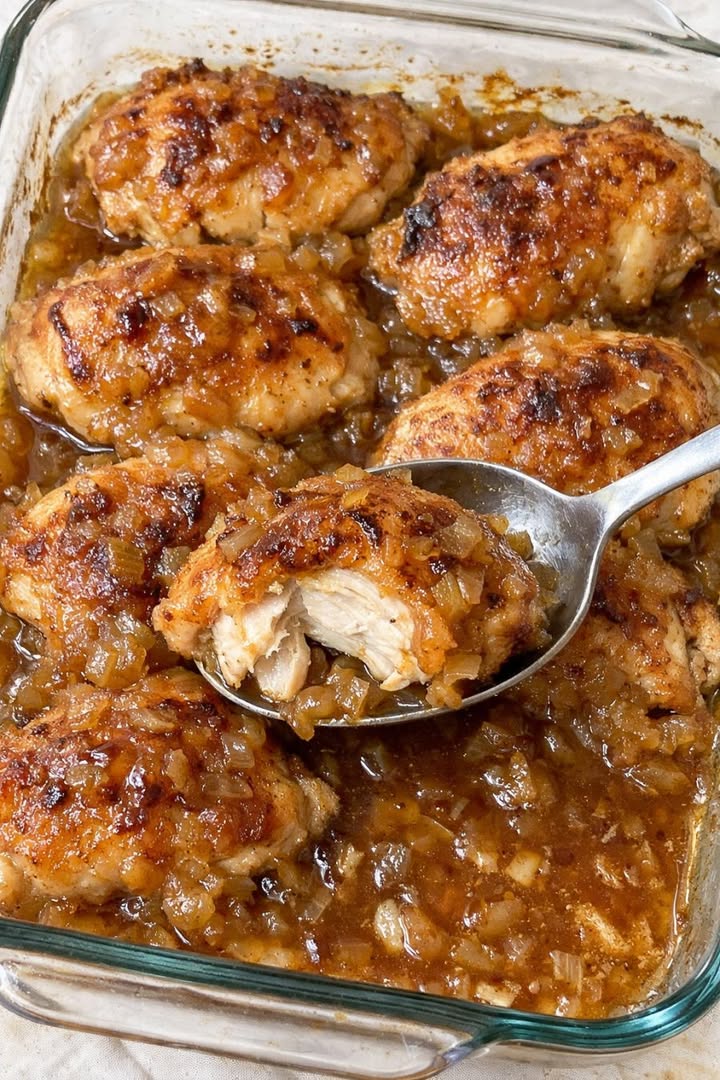
Bone-in chicken pieces. Condensed cream of chicken soup. Dry onion soup mix. Those three things, combined in a glass baking dish and put into the oven, produce golden, fall-off-the-bone tender chicken basted in a caramelized onion glaze that bubbles and deepens around the pieces over the course of an hour. The smell that fills the house is the kind that makes people wander into the kitchen an hour before dinner is ready, asking hopefully if it is done yet.
It is the kind of chicken recipe that has earned sixty years of Sunday suppers. It will earn yours too.
Why This Recipe Has Been Treasured for Sixty Years
- Only 3 ingredients — bone-in chicken, cream of chicken soup, and dry onion soup mix. All of them affordable, all of them available at any grocery store, all of them likely already in your kitchen.
- No fussy prep. Pat the chicken dry, mix two ingredients together, spread over the top, cover with foil, and put it in the oven. That is the entire job.
- That glaze. The cream of chicken soup and dry onion soup mix meld together in the oven heat into a caramelized, glossy, deeply savory glaze that bastes the chicken as it cooks and concentrates into something extraordinary by the time it comes out.
- Bone-in, skin-on chicken stays incredibly juicy. The covered bake method keeps all the moisture inside the dish for the first 45 minutes, and the skin crisps and browns beautifully in the uncovered portion of the bake.
- Scales perfectly for a crowd — use a second dish and double the sauce for a family gathering, a potluck, or a Sunday dinner that feeds everyone who shows up.
- Leftovers make outstanding next-day lunches tucked into soft rolls with the onion glaze spooned over the top.
Ingredients
Serves 4 to 6
- 3 to 4 pounds bone-in chicken pieces (legs, thighs, or bone-in breasts, skin on)
- 1 (10.5-ounce) can condensed cream of chicken soup
- 1 (1-ounce) packet dry onion soup mix
On the chicken cut: Bone-in, skin-on dark meat — thighs and legs — is the ideal choice for this recipe and for slow oven braises in general. The bone contributes flavor and collagen to the pan juices, the skin crisps and bastes the meat as fat renders, and the higher fat content of dark meat makes it deeply forgiving and nearly impossible to dry out over the long cook time. Bone-in breasts work well but require a watchful eye toward the end of baking — they can go from perfectly done to dry more quickly than thighs. Boneless, skinless cuts are not recommended for this recipe; the skin and bone are structural to the result.
On patting the chicken dry: This step appears small and feels skippable. It is neither. Moisture on the surface of the chicken creates steam between the meat and the sauce that prevents the glaze from adhering properly and can make the finished skin less golden. Thirty seconds with paper towels produces noticeably better results.
Step-by-Step Instructions
Step 1: Preheat and Prepare
Preheat your oven to 350°F (175°C) and set out a 9×13-inch glass baking dish. Glass is the preferred material for this recipe — it distributes heat gently and evenly, allows you to see the glaze caramelizing around the edges, and goes from oven to table without any loss of heat.
Step 2: Prep the Chicken
Pat each chicken piece thoroughly dry with paper towels on all sides. Arrange the pieces in a single layer in the glass baking dish, skin side up, with a small amount of space between pieces if possible. Skin side up is essential — the skin needs to face the open oven air during the uncovered portion of the bake to brown and crisp properly. Pieces crowded too tightly together will steam each other rather than caramelizing.
Step 3: Make the Glaze
In a medium bowl, stir together the condensed cream of chicken soup and the entire packet of dry onion soup mix until well combined. The mixture will be quite thick with visible herb and onion pieces throughout — this is the right consistency. It should look like a dense, speckled paste rather than a pourable sauce.
Step 4: Coat the Chicken
Spoon or pour the soup mixture evenly over the chicken pieces, spreading it generously over the top and sides of each piece so every surface is well coated. Some of the mixture will settle around the bottom of the dish — this is intentional and important. Those pan juices will concentrate and caramelize during the bake, becoming the rich glaze that makes this dish so remarkable.
Step 5: Covered Bake
Cover the baking dish tightly with aluminum foil — press it firmly against all four edges of the dish — and place it on the middle rack of the preheated oven. Bake covered for 45 minutes. The tight foil seal traps steam from the chicken and sauce, which keeps the meat exceptionally juicy and allows the flavors to penetrate deeply before the uncovered browning phase begins.
Step 6: Uncover and Baste
After 45 minutes, carefully remove the foil — stand back slightly as hot steam will escape. Using a large spoon or a basting brush, spoon the accumulated pan sauce generously over the tops of all the chicken pieces. This basting step redistributes the caramelized, concentrated juices from the bottom of the dish back over the chicken, building up the glaze layer by layer.
Step 7: Uncovered Bake to Finish
Return the dish to the oven, uncovered, and bake for another 25 to 35 minutes, until the chicken skin is golden, the onion soup glaze is bubbling and beginning to caramelize and darken around the edges of the dish, and the internal temperature of the thickest piece reaches at least 165°F (74°C). For extra browning on the skin, move the dish up one rack for the final 5 to 10 minutes — watch it closely so the glaze does not burn.
Step 8: Rest and Serve
Remove the dish from the oven and allow the chicken to rest for 5 to 10 minutes before serving. The sauce will thicken slightly during the rest. When serving, spoon the caramelized onion glaze and pan juices generously over each piece — every portion should have a good coating of that glossy, savory sauce that pools at the bottom of the dish.
Pro Tips for Golden, Perfectly Glazed Chicken
- Pat the chicken completely dry. Surface moisture is the enemy of a good glaze and a properly browned skin. Every drop of surface moisture that you remove with a paper towel is moisture that will not be creating steam between the chicken and the sauce during baking. The result is a much better-adhered glaze and significantly crispier skin.
- Skin side up, always. This instruction exists for both food safety and quality reasons. Skin side up allows the fat to render downward through the meat during the long bake, basting it from the inside, while the skin surface itself is exposed to the oven heat for the crisping and browning that makes this dish look as good as it tastes.
- Seal the foil tightly for the covered phase. The first 45 minutes of covered baking is what keeps the chicken moist and gives the sauce time to penetrate the meat before the browning begins. A loose foil cover lets steam escape, which can dry the meat and prevent the sauce from developing properly.
- Use a thermometer, not just time. Ovens vary significantly, and bone-in chicken pieces vary in size. The only reliable confirmation that the chicken is safely cooked is an instant-read thermometer inserted into the thickest part of the largest piece, away from the bone, reading at least 165°F (74°C). Do not rely on color or time alone.
- Do not skip the basting step. The pan juices that accumulate during the covered bake are intensely concentrated and flavored. Spooning them back over the chicken before the uncovered bake is the step that builds the multilayered, deeply caramelized glaze that distinguishes this dish from a plain baked chicken.
- Dark meat is the most forgiving choice. If this is your first time making this recipe, use thighs and legs. They are nearly impossible to overcook to the point of dryness, they contribute more collagen and flavor to the pan juices, and they produce a more impressive result with less precision than bone-in breasts.
Serving Suggestions
Serve this like the 1960s Sunday table it came from:
- Fluffy mashed potatoes — The definitive pairing. A mountain of buttery mashed potatoes with a generous spoon of the caramelized onion glaze poured over is one of the great plates of American home cooking. Every bit of that sauce should end up on the potatoes.
- Buttered egg noodles — Wide egg noodles tossed in butter catch the pan juices beautifully and make for a deeply comforting, old-fashioned dinner that feels like a proper Sunday supper.
- Buttered peas or green beans — Simple, lightly seasoned green vegetables are the classic Sunday table accompaniment — fresh, sweet, and just the right contrast to the rich, savory chicken glaze.
- Warm dinner rolls — For mopping up the glossy onion sauce left in the bottom of the dish and on the plate. Essential and deeply satisfying.
- A simple tossed salad — Crisp greens with a light dressing provide freshness and acidity that balance the richness of the glaze and reset the palate between bites.
- Next-day lunch: Shred any leftover chicken from the bone and tuck it into soft sandwich rolls with a generous spoonful of the cold pan glaze (which will have thickened to almost a jam-like consistency in the refrigerator). One of the best things a Sunday supper can produce.
Easy Variations to Try
- Tangy 1970s version: Stir 2 to 3 tablespoons of sour cream or plain yogurt into the soup and onion mix before spreading it over the chicken. The dairy adds a gentle tang and makes the sauce slightly creamier and more substantial — a common variation that appeared in later versions of this recipe throughout the 1970s and 1980s.
- Add paprika: Sprinkle a light dusting of smoked or sweet paprika over the chicken pieces before adding the soup mixture. It adds color, a gentle warmth, and a subtle depth that makes the finished dish look more polished and taste more complex.
- Add vegetables: Tuck peeled carrot chunks, quartered onions, or halved baby potatoes around the chicken pieces in the dish before adding the sauce. They roast in the pan juices and absorb the onion glaze flavor beautifully — turning a three-ingredient chicken into a complete one-dish meal.
- Boneless, skinless breasts: Reduce the covered bake time to 30 minutes and the uncovered time to 15 to 20 minutes. Check the internal temperature frequently toward the end — boneless breasts cook faster and have less margin for error than bone-in thighs. They will still be delicious, just less forgiving.
- Double batch for a crowd: Use two 9×13-inch dishes side by side in the oven, doubling the sauce quantity. Rotate the dishes between the upper and lower racks halfway through the uncovered bake for even browning across both pans.
Storing and Reheating Leftovers
Allow the chicken to cool slightly, then transfer leftovers to shallow airtight containers along with all the pan sauce and refrigerate within 2 hours of baking. Store for up to 3 to 4 days. The sauce will thicken to an almost jam-like consistency in the refrigerator — this is normal and one of the things that makes leftover chicken sandwiches from this recipe so good. To reheat, place the chicken and sauce in a covered baking dish and warm in a 300°F (150°C) oven for 15 to 20 minutes until heated through, or microwave in covered intervals until steaming hot in the center. A small splash of water or chicken broth added before reheating helps revive the sauce if it has become very thick during storage.
The Bottom Line
This oven baked 3-ingredient chicken spectacular has been sitting in metal recipe boxes and church cookbooks across the Midwest since 1965 for very good reason. Three ingredients. A glass baking dish. About an hour in the oven. And golden, tender, fall-off-the-bone chicken bathed in a caramelized onion glaze that tastes like someone who really knew what they were doing in a kitchen made it — because someone did, sixty years ago, and the recipe has been right every single time since.
It is the Sunday supper that fills the house with the right smell. The recipe that impresses without intimidating. The chicken that makes people reach across the table for the spoon to get more of that glaze on their potatoes before the dish is passed around again.
Make it this Sunday. The 1965 version of this recipe will be as good in your oven tonight as it was in every farmhouse kitchen it has ever passed through.
Three ingredients. One glass dish. Sixty years of Sunday suppers — and counting.