5-Ingredient Church Cookbook Beef Roll Ups (The Holiday Main That Disappears Every Time)
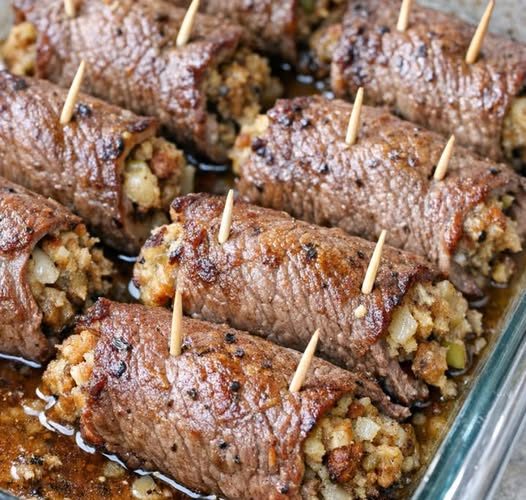
If you have ever leafed through a church ladies’ auxiliary cookbook — the spiral-bound kind with soft, splattered pages and recipe titles written in careful cursive — you know exactly the kind of food this is. Practical, budget-friendly, quietly impressive, and made with the kind of unfussy confidence that comes from decades of feeding large tables of hungry people without any fuss whatsoever. These 5-ingredient church cookbook beef roll ups are that dish in its most beloved form. Thin slices of beef, wrapped around a simple seasoned stuffing, nestled into a glass baking dish, and baked under a cream of mushroom pan sauce until the tops are golden and the pan is full of savory, bubbling gravy-like drippings.
The original recipe card has the note written next to it: Disappeared at Easter. That is the whole review. That is the only review you need.
Make-ahead friendly, special enough for a holiday table, and simple enough for a cozy Sunday dinner with whatever you have in the pantry — this is the recipe that earns a permanent spot in your meal rotation the first time you make it.
Why This Recipe Earned a Circle in Every Church Cookbook It Appeared In
- Only 5 ingredients — thin beef round, boxed stuffing mix, beef broth, cream of mushroom soup, and butter. Every single one is affordable and widely available.
- Make-ahead friendly. Assemble the roll ups completely, cover, and refrigerate for up to 24 hours before baking. Pull from the fridge, slide into the oven, and dinner handles itself.
- The pan sauce is built in. The cream of mushroom soup and beef broth poured over and around the roll ups before baking become a rich, savory, gravy-like sauce that develops during the bake with no separate sauce-making required.
- Impressive enough for a holiday table — roll ups served from a glass casserole dish with glossy pan sauce look genuinely special — yet simple enough that a first-time cook can produce them successfully on their first attempt.
- Feeds 6 people generously from one baking dish, and the recipe scales cleanly for a larger gathering.
- Leftovers reheat beautifully and make excellent next-day lunches — the stuffing absorbs even more of the pan sauce overnight and the roll ups taste better the second day than many dishes taste fresh.
Ingredients
Serves 6
- 1½ pounds thin-sliced beef round steak or top round (about 8 to 10 slices, approximately ¼-inch thick)
- 1 (6-ounce) box seasoned stuffing mix (herb-flavored)
- 1½ cups low-sodium beef broth, divided (1 cup for the stuffing, ½ cup for the sauce)
- 1 (10.5-ounce) can condensed cream of mushroom soup
- 2 tablespoons unsalted butter, melted, plus extra for greasing the dish
On the beef: Thin-sliced beef round steak or top round — cut to approximately ¼-inch thickness — is the ideal cut for this recipe. It is lean enough to roll cleanly, affordable enough to make this a genuinely budget-friendly dinner, and tender enough after a long braised bake to cut with a fork. Look for pre-sliced beef at the meat counter labeled “minute steak,” “sandwich steak,” or “thin beef cutlets” — all are appropriate. If the slices you find are uneven or slightly thicker than ¼-inch, a brief pounding between sheets of plastic wrap with a meat mallet (or the flat bottom of a heavy pan) takes about 30 seconds per slice and ensures even cooking throughout.
On the broth: Low-sodium beef broth is strongly recommended here. The condensed cream of mushroom soup already carries significant salt, and full-sodium broth can push the pan sauce into uncomfortably salty territory. Always taste the sauce before serving and season at the table rather than during assembly.
Step-by-Step Instructions
Step 1: Preheat and Prepare the Dish
Preheat your oven to 350°F (175°C). Lightly butter a 9×13-inch glass baking dish. Glass is the preferred material — it distributes heat gently and evenly for a braised dish like this, allows you to see the sauce bubbling around the roll ups, and produces beautiful browning on the tops without scorching the bottoms.
Step 2: Prepare the Stuffing
In a medium bowl, combine the boxed stuffing mix with 1 cup of the beef broth and the melted butter. Stir until the liquid is fully absorbed and the stuffing is evenly moistened — it should hold together when pressed between your fingers but not be wet or soupy. If the stuffing seems dry after stirring, add a splash more broth a tablespoon at a time. If it seems too wet, allow it to sit for 2 to 3 minutes to absorb the liquid further. The right consistency is crucial — stuffing that is too wet will squeeze out of the rolls during baking; too dry and it will crumble rather than holding together in a neat cylinder.
Step 3: Pound the Beef (If Needed)
Lay the beef slices flat on a clean cutting board. If any pieces are thicker than approximately ¼-inch or uneven in thickness, place them between two sheets of plastic wrap and gently pound with a meat mallet or the flat bottom of a heavy skillet until the thickness is even throughout. Even thickness ensures each roll up bakes at the same rate — thick sections will be tough while thin sections are overdone if the slices are not uniform.
Step 4: Fill and Roll
Divide the stuffing mixture evenly among all the beef slices, placing a compact log or mound of stuffing near one short end of each piece. Leave a small border — about ½ inch — at the edges so the stuffing does not squeeze out entirely when the beef is rolled. Starting from the stuffing end, roll each beef slice snugly around the filling, tucking in the sides slightly as you go to contain the stuffing. Secure each roll with 1 to 2 toothpicks inserted crosswise through the seam.
Step 5: Arrange in the Dish
Place the beef roll ups seam-side down in a single layer in the prepared baking dish, nestling them fairly close together without stacking. The close arrangement is intentional — it keeps the stuffing moist during the long bake and encourages the pan sauce to pool around and between the rolls rather than spreading thinly across the bottom of a half-empty dish.
Step 6: Make and Pour the Pan Sauce
In a small bowl, whisk together the condensed cream of mushroom soup and the remaining ½ cup of beef broth until the mixture is relatively smooth and pourable. Pour it evenly over and around all the beef roll ups, letting it run down between them and cover the bottom of the dish. This sauce is what braises the beef during the covered bake and develops into the glossy, savory pan sauce that makes every serving from this dish extraordinary.
Step 7: Covered Bake
Cover the baking dish tightly with aluminum foil, pressing the edges firmly against the dish, and bake on the middle rack for 45 minutes. The covered bake is the braising phase — the trapped steam tenderizes the beef, allows the stuffing to finish hydrating, and gives the sauce time to penetrate every component of the roll ups before the browning phase begins.
Step 8: Uncovered Bake to Finish
Remove the foil carefully — hot steam will escape. Continue baking uncovered for 20 to 25 minutes, until the tops of the roll ups are lightly golden, the sauce is bubbling actively and slightly thickened, and the beef is fully tender. If any toothpicks are very exposed above the sauce line, gently rotate them so they do not scorch.
Step 9: Rest, Remove Toothpicks, and Serve
Remove the dish from the oven and rest for 5 to 10 minutes before serving. Carefully remove and discard all toothpicks before plating — check each roll carefully to ensure none are left behind. Spoon the pan sauce generously over each roll up when serving so every portion is bathed in that savory, mushroom-rich glaze.
Pro Tips for Perfect Beef Roll Ups Every Time
- Get the stuffing consistency right before you roll. This is the most critical prep step. Stuffing that is too wet squeezes out of the rolls immediately, creating a mess in the dish and leaving the beef with no filling. Too dry and it crumbles rather than holding shape. The right stuffing holds together when pressed but does not weep liquid when squeezed. When in doubt, let the stuffing sit for 3 minutes after mixing before assessing — the bread cubes continue absorbing liquid for a few minutes after initial stirring.
- Pound the beef to even thickness. This step takes less than a minute per slice and makes a significant difference in the finished dish. Uneven slices produce roll ups where the thick end is still chewy when the thin end is overcooked. Even, ¼-inch slices bake uniformly from edge to edge.
- Seam side down, always. Placing the roll ups with the seam facing the bottom of the dish is the simple technique that keeps them from unrolling during baking. The weight of the roll and the surrounding sauce hold the seam in place without needing extra toothpicks.
- Nestle the rolls close together. The close arrangement is not just about fitting more into the dish — it creates a contained environment where the sauce stays concentrated around the rolls rather than spreading thinly. Close rolls baste each other during the uncovered phase and emerge juicier than rolls spread loosely across the dish.
- Remove every toothpick before serving. Count them when you put them in (typically 1 to 2 per roll) and count them again when you remove them. A missed toothpick in a served portion is a serious hazard. If you find it easier, use skewers that are more visible or kitchen twine that can be removed as a complete piece.
- Low-sodium broth and taste at the end. The cream of mushroom soup is already quite salty. Using regular beef broth can make the finished sauce uncomfortably salty before any additional seasoning is added. Start low-sodium and adjust at the table.
Serving Suggestions
Serve these the way they would have been served at the Easter table they disappeared from:
- Buttery mashed potatoes — The most natural companion to beef roll ups with pan sauce. A generous serving of mashed potatoes next to the rolls, with a ladle of the mushroom-beef pan sauce poured over everything, is one of the most satisfying plates of home-cooked food imaginable.
- Buttered egg noodles — Wide egg noodles tossed in butter under the roll ups and pan sauce is the old-fashioned Midwestern alternative to mashed potatoes — equally delicious and particularly good at catching every drop of the sauce.
- Steamed green beans or roasted asparagus — A simply prepared green vegetable adds color, freshness, and a gentle bitterness that balances the richness of the stuffed beef and mushroom sauce.
- Warm dinner rolls — For soaking up the last of the pan sauce from the bottom of the dish. Essential for anyone who understands the value of that last spoonful of something good.
- Pickled beets or vinegar-based coleslaw — A tangy, acidic side that cuts cleanly through the richness of the stuffed beef and resets the palate between bites — particularly valuable on a holiday table with multiple rich dishes.
- Simple tossed salad — Light, crisp, and dressed simply — exactly the contrast a rich, savory main dish needs alongside it.
Easy Variations to Try
- Cornbread stuffing version: Substitute cornbread stuffing mix for the herb stuffing for a slightly sweeter, more rustic filling with a distinctly Southern comfort food character. Particularly good with the cream of mushroom pan sauce.
- Creamier sauce: Stir 1 to 2 tablespoons of sour cream into the cream of mushroom and broth mixture before pouring it over the rolls. The sour cream adds a gentle tang and makes the finished sauce noticeably richer and more substantial.
- Add aromatics to the stuffing: Stir 2 to 3 tablespoons of finely chopped sautéed onion and celery into the prepared stuffing before filling the rolls. The aromatics add a savory depth that makes the stuffing taste more homemade and complex.
- Turkey or pork version: Thin-sliced turkey cutlets or pork loin can substitute for the beef at the same thickness. Reduce the covered bake time by 10 minutes and check internal temperature early — leaner meats cook faster and dry out more quickly than beef round. Turkey rolls are particularly popular for holiday meals as a lighter alternative.
- Cream of mushroom swap: Use condensed cream of celery or cream of chicken soup in place of cream of mushroom for a different but equally good pan sauce that changes the character of the dish while keeping the technique identical.
Make-Ahead Instructions
This recipe is specifically designed for make-ahead preparation. Assemble the roll ups completely — stuffed, rolled, toothpicked, and arranged in the sauced baking dish — then cover the dish tightly with plastic wrap and refrigerate for up to 24 hours before baking. When ready to bake, remove the plastic wrap, cover with foil, and proceed with the recipe as written — adding 5 to 10 extra minutes to the covered bake time to account for the cold start. This make-ahead quality makes the recipe ideal for Easter Sunday, Christmas dinner, or any gathering where you want to do the work the day before and spend time with your guests rather than in the kitchen.
Storing and Reheating Leftovers
Cover the baking dish or transfer leftovers to airtight containers along with all the pan sauce and refrigerate within 2 hours of baking. Store for up to 3 to 4 days. The stuffing inside the rolls will continue absorbing the pan sauce during storage, resulting in roll ups that are even more flavorful and cohesive on day two. To reheat, place in a covered baking dish with a small splash of beef broth and warm in a 300°F (150°C) oven for 15 to 20 minutes until heated through, or microwave in covered intervals until steaming hot in the center. Do not overheat — the beef will toughen if boiled in the microwave at high power.
The Bottom Line
These 5-ingredient church cookbook beef roll ups are the kind of recipe that earns a circle on the recipe card and a permanent spot in the family’s holiday meal rotation — not because they are technically demanding or visually elaborate, but because they are deeply, reliably satisfying in a way that simpler-seeming food often is not. Seasoned stuffing wrapped in tender braised beef, baked under a savory mushroom pan sauce, served straight from a glass casserole dish with mashed potatoes on the side.
It is the dish that disappeared at Easter in 1965. It will disappear at your Easter table too. And then someone will circle the recipe, add a note, and pass it along — which is exactly how the best recipes travel.
Five ingredients. One baking dish. The church cookbook recipe that has earned a circle on every card it has ever appeared on.