
Slow Cooker 4-Ingredient Amish Sour Cream Noodles (Silky, Buttery & Impossible to Stop Eating)
There are recipes that neighbors pass over the fence. Recipes that appear unrequested on your doorstep in a covered dish after a long week, because whoever brought it knew exactly what you needed. Recipes that families quietly make once and then find themselves pulling out the slow cooker for again and again without quite deciding to — because once is all it takes to understand why this dish has been circulating across Midwestern kitchen tables for as long as anyone can remember.
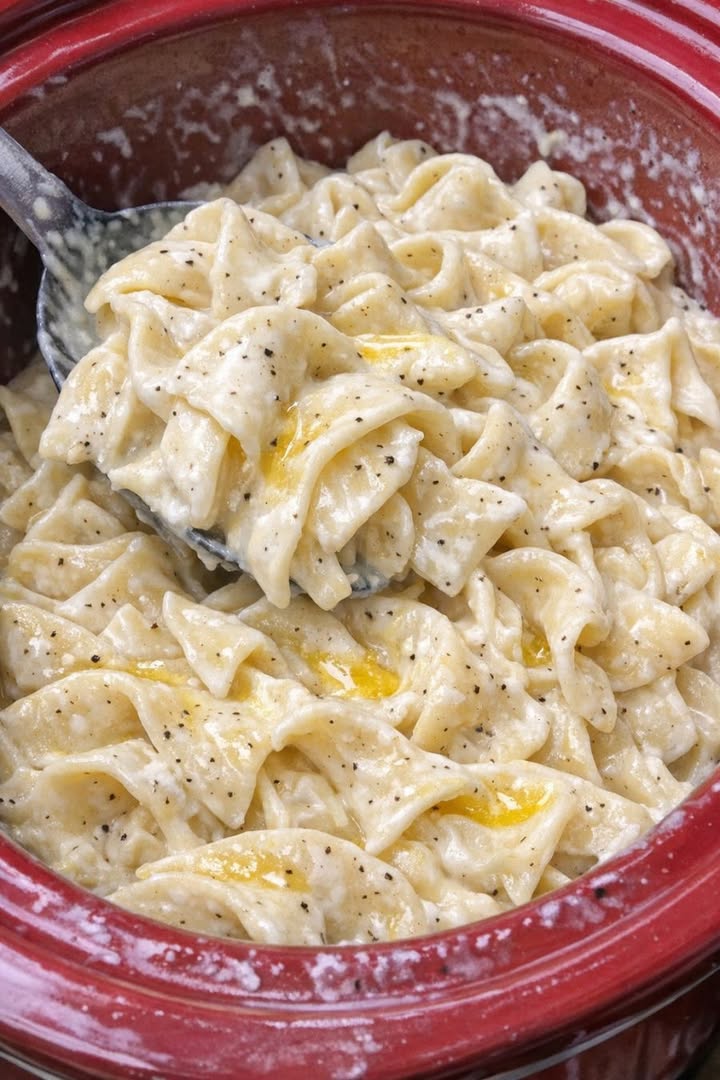
This slow cooker 4-ingredient Amish sour cream noodles is that recipe. Wide egg noodles cooked low and slow in buttery chicken broth until they absorb every drop of flavor and turn silky and glossy with starch. Then the heat comes down and full-fat sour cream is folded in — gently, slowly, until every strand of noodle is coated in a cream sauce that is rich without being heavy, tangy without being sharp, and buttery in a way that makes every other noodle dish feel like it was not quite finished.
Four ingredients. One slow cooker. The kind of comfort food that makes people ask for the recipe before the bowl is empty.
Why These Amish Sour Cream Noodles Become a Weekly Ritual
- Only 4 core ingredients — egg noodles, chicken broth, sour cream, and butter. Simple, affordable, and the kind of thing most kitchens already have.
- Completely hands-off for most of the cook. The broth and noodles go in, the lid goes on, and the slow cooker handles the first hour and a half without any intervention.
- That sauce. The starchy noodle cooking liquid combined with the folded-in sour cream and melted butter produces a sauce that clings to every strand with a silkiness that no separate sauce-making process can replicate.
- Ready in under 2 hours — significantly faster than most slow cooker recipes, making it genuinely practical for weeknight dinners.
- Works as a complete main or a supporting side. Serve alone with a salad for a satisfying vegetarian dinner, or alongside roasted chicken, pork chops, or meatloaf for a classic Midwestern supper.
- Scales up effortlessly to feed a larger crowd — simply increase the ingredients proportionally and use a larger slow cooker.
Ingredients
Serves 6
- 12 oz wide egg noodles, dried (homestyle or Amish-style if available)
- 3 cups low-sodium chicken broth
- 2 cups full-fat sour cream
- 6 tablespoons unsalted butter, cut into pieces
- 1 teaspoon kosher salt, or to taste
- ½ teaspoon freshly ground black pepper, plus more for serving
On the egg noodles: Wide or extra-wide dried egg noodles are the right choice here — their thickness and egg content gives them the structural integrity to absorb the broth during the slow cook without turning mushy, and their slight chew provides the textural contrast that makes the silky sour cream sauce so satisfying. If you can find Amish-style homestyle noodles at your grocery store, they are particularly excellent in this recipe — slightly thicker and more rustic than standard egg noodles, they absorb broth deeply and hold the cream sauce beautifully.
On the sour cream: Full-fat sour cream is essential. Reduced-fat or light sour cream contains more stabilizers and less fat, which means it is more likely to break or curdle when added to hot food and produces a noticeably thinner, less luxurious sauce. Full-fat sour cream folds in smoothly, coats the noodles evenly, and produces the rich, silky result that makes this dish so remarkable. Keep it refrigerated until the moment you are ready to fold it in.
On the broth: Low-sodium chicken broth is recommended because it gives you full control over the final seasoning. The broth reduces slightly during cooking as it is absorbed by the noodles, which concentrates its saltiness. Starting with low-sodium broth prevents the finished dish from tasting oversalted before any additional seasoning is added.
Step-by-Step Instructions
Step 1: Prepare the Slow Cooker
Lightly grease the inside of a 4 to 6-quart slow cooker with a small amount of butter or nonstick cooking spray. Egg noodles are particularly prone to sticking to the sides and bottom of the crock during cooking — especially near the end of the cook when the liquid is mostly absorbed and the starch concentration in the pot is high. A greased crock prevents this and makes folding in the sour cream much easier.
Step 2: Add the Broth and Seasoning
Pour the chicken broth into the slow cooker. Add the salt and black pepper and stir briefly to distribute the seasoning evenly through the liquid. Seasoning the broth before adding the noodles ensures the flavor is incorporated throughout the dish from the start rather than sitting only on the surface.
Step 3: Add the Noodles and Butter
Add the dried egg noodles to the broth, spreading them as evenly as possible. Press them down gently with a spoon to help submerge as many as possible in the broth — it is fine if a few tips remain above the liquid level, as they will soften and sink as the broth heats and steam builds inside the crock. Dot the pieces of butter evenly over the top of the noodles, spacing them so they will melt and swirl through the broth as the slow cooker heats up rather than pooling in one spot.
Step 4: Cook, Stir, and Continue Cooking
Cover the slow cooker and cook on HIGH for 1 hour. At the 1-hour mark, lift the lid and give the noodles a gentle stir, lifting from the bottom to loosen any that may be beginning to stick to the crock. Replace the lid and continue cooking on HIGH for another 30 to 45 minutes, until the noodles are fully tender but still have slight body — not mushy — and most of the broth has been absorbed into a glossy, starchy coating on the noodles. There should be just a small amount of saucy liquid remaining at the bottom of the crock.
Step 5: Reduce the Heat
Once the noodles are tender and the broth is mostly absorbed, switch the slow cooker to WARM or LOW. This temperature reduction is critical before adding the sour cream. Sour cream added to very hot food at HIGH heat can break and curdle — producing a grainy, separated sauce rather than a smooth, silky one. The WARM setting provides enough residual heat to warm the sour cream and melt it into the noodles without bringing it to a temperature that causes it to separate.
Step 6: Fold in the Sour Cream
Add all the sour cream directly to the hot noodles in the slow cooker. Using a large spoon or rubber spatula, fold the sour cream into the noodles using slow, sweeping motions that turn the mixture over on itself rather than stirring or beating. Avoid aggressive stirring — it breaks the noodles apart and can make the sauce grainy. Continue folding until every strand of noodle is visibly coated in the creamy sauce and no white streaks of unincorporated sour cream remain. Taste and adjust the seasoning with additional salt and black pepper as needed.
Step 7: Rest and Serve
Leave the lid slightly ajar and allow the noodles to rest on WARM for 5 to 10 minutes. During this brief rest, the sauce thickens slightly and tightens around each noodle strand, and the butter swirls become visible and glossy throughout the pot. Serve directly from the slow cooker, topped with an extra grind of black pepper and, if you like, a small additional pat of cold butter placed on top of each serving for extra richness and gloss.
Pro Tips for the Silkiest Sour Cream Noodles
- Reduce the heat before adding the sour cream. This is the single most important technique step in the recipe. Sour cream added to food that is still cooking on HIGH heat is at risk of curdling — the proteins in the sour cream coagulate at high temperatures and the result is a grainy, broken sauce rather than a smooth one. Switching to WARM first takes less than 30 seconds and prevents the most common failure in this recipe.
- Use full-fat sour cream, removed from the fridge at the last moment. Cold, full-fat sour cream added to warm noodles folds in more smoothly than sour cream that has been sitting at room temperature. The slight temperature contrast between cold sour cream and warm noodles slows the incorporation and makes folding easier and more controllable.
- Fold, never stir. Wide egg noodles are delicate after cooking — they break apart with minimal pressure. Gentle folding motions preserve the noodle structure and produce a finished dish with long, intact strands coated in sauce rather than a pot of broken noodle pieces.
- The rest period is not optional. The 5 to 10 minutes on WARM with the lid ajar is when the sauce transitions from loose and coating to thick and clinging. Noodles served immediately after folding in the sour cream will be looser and less cohesive. Noodles served after a proper rest will have that signature melt-on-your-tongue, silk-coating texture that makes this dish so distinctive.
- Taste and season after folding, not before. The sour cream adds its own mild acidity and the broth reduces during cooking, concentrating salt. The right moment to taste and adjust seasoning is after the sour cream is fully incorporated — not during the initial broth stage when the flavor profile is still developing.
- A small pat of cold butter on each serving makes a real difference. A piece of cold, unsalted butter placed on top of each warm serving melts slowly as the bowl reaches the table, creating a glossy, richly golden finish that makes the dish look and taste more refined with almost no additional effort.
Serving Suggestions
These noodles are rich and satisfying enough to be the main event, or generous enough to support a protein alongside:
- As a complete main with a crisp green salad — Lightly dressed mixed greens with a sharp vinaigrette cut through the richness of the butter and sour cream sauce beautifully. This is the simplest, most satisfying way to serve these noodles on a weeknight.
- Alongside roast or rotisserie chicken — The neutral, creamy noodles are the ideal complement to well-seasoned roasted chicken. The pan juices or gravy from the chicken can be spooned over the noodles for an additional layer of flavor.
- With pork chops or meatloaf — Classic Midwestern supper pairings that feel complete and deeply comforting served together. The noodles absorb any extra sauce or pan drippings from the meat beautifully.
- With buttered peas or steamed green beans — A simple, sweet green vegetable provides color, freshness, and a counterpoint to the richness of the cream sauce without requiring any additional cooking complexity.
- With crusty bread or dinner rolls — For swiping through the extra sauce in the bowl. Genuinely important for anyone who takes the sauce seriously, which is everyone.
Easy Variations to Try
- Add cooked chicken or ham: Fold 1½ to 2 cups of shredded cooked chicken, diced ham, or flaked smoked sausage into the noodles at the same time as the sour cream. Allow to warm through on WARM for an additional 5 minutes. This turns the side dish into a complete, protein-rich main in the same single pot.
- Lighter version with Greek yogurt: Substitute half of the sour cream with full-fat plain Greek yogurt. Add both off the heat and fold gently — the yogurt has slightly more protein than sour cream and can be more prone to curdling, so the temperature management step is especially important here.
- Looser, more spoonable sauce: Stir in an extra ½ to 1 cup of warm chicken broth when adding the sour cream for a sauce with more liquid that pools generously around the noodles in each bowl — particularly good if serving as a soup-adjacent dish in very cold weather.
- Add Parmesan: Stir 2 to 3 tablespoons of freshly grated Parmesan into the sour cream before folding it into the noodles. The Parmesan adds a savory, nutty depth that makes the sauce taste more complex and restaurant-quality without changing the essential character of the dish.
- Add a spoonful of Dijon: Whisk 1 teaspoon of Dijon mustard into the sour cream before folding it in for a subtle, barely perceptible sharpness that makes every bite more interesting. It is not identifiable as mustard — it simply makes the sauce taste more complete.
- Vegetarian version: Substitute vegetable broth for chicken broth in an exact swap. The result is slightly lighter in flavor but still rich and satisfying, and the dish is naturally meatless with this single substitution.
Storing and Reheating Leftovers
Transfer leftovers to a shallow airtight container and refrigerate within 2 hours of cooking. Store for up to 3 days. The noodles will absorb the remaining sauce during storage and the dish will look very dry and dense when cold — this is normal and easily remedied. Before reheating, add a generous splash of chicken broth or whole milk (about ¼ cup per serving) and stir gently to begin loosening the sauce. Reheat in the microwave in covered 60-second intervals, stirring between each, until steaming hot and creamy throughout. Alternatively, reheat in a small covered saucepan over very low heat with added liquid, stirring gently until warmed through. Do not boil — aggressive reheating can break the sour cream sauce and make it grainy.
The Bottom Line
These slow cooker 4-ingredient Amish sour cream noodles are the kind of recipe that sounds almost too simple to justify making — and then you make them once and immediately understand why they have been quietly circulating across Midwestern kitchen tables for generations. Four ingredients. Under two hours. A pot of silky, buttery, tangy, utterly satisfying noodles that coat your tongue in a sauce so smooth and cohesive it feels like the noodles and the cream were always meant to be together in exactly this way.
Make them on a Tuesday when dinner needs to be effortless. Make them for a gathering where you want to put something genuinely comforting on the table without spending the afternoon in the kitchen. Make them for anyone who needs the kind of food that feels like being taken care of.
This is that food. And once you make it, it becomes one of those recipes you just keep making — without quite deciding to, because that is what the best recipes do.
Four ingredients. One slow cooker. The silkiest noodle dish that has been passing between neighbors for longer than anyone can remember.