
5-Ingredient Slow Cooker Lemon Sponge Pudding (Self-Saucing, Vintage & Absolutely Magical)
There is a whole category of desserts that feel like a small miracle — the kind where you put something into the oven (or in this case, the slow cooker) looking like nothing particularly remarkable, and what comes back out is something genuinely extraordinary. This 5-ingredient slow cooker lemon sponge pudding belongs entirely to that category. It is an old-fashioned self-saucing lemon pudding, the kind grandmothers have been making for generations — except adapted for the slow cooker so the magic happens completely hands-off while you make dinner or set the table for a special occasion.
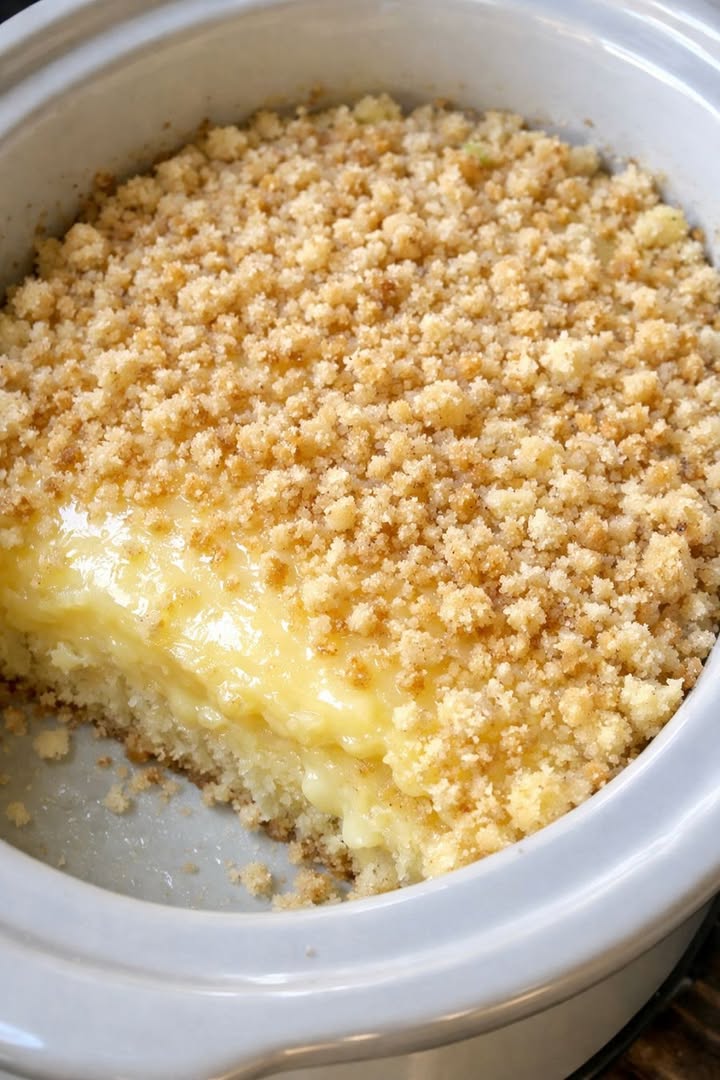
As it cooks, something remarkable takes place without any intervention from you. The thin batter separates into two distinct layers: a soft, delicate sponge rises to the top, and a silky, pale yellow lemon custard forms underneath. Scoop down to the bottom of the crock and every serving gets both — the light, tender crumb on top and the warm, creamy, bright-tasting custard below. It is the kind of dessert that makes people ask how you did it, and the honest answer is that you barely did anything at all.
Five ingredients. One slow cooker. A dessert worth pulling out for every Mother’s Day, Easter table, and special occasion that deserves something genuinely impressive.
Why This Lemon Sponge Pudding Belongs on Every Special Occasion Table
- Only 5 ingredients — sugar, flour, eggs, whole milk, and fresh lemon juice. Simple, wholesome, and nothing from a box.
- Self-saucing magic. The batter separates during cooking into a tender sponge on top and a creamy lemon custard underneath — entirely on its own, with no extra steps required.
- Completely hands-off once assembled. The slow cooker does everything for 2½ to 3 hours while you focus on the rest of the meal, the table setting, or your guests.
- Holiday-worthy presentation from a single crock. Served warm, scooped directly at the table so everyone can see the custard layer — it looks intentional, impressive, and beautiful.
- Bright, refreshing lemon flavor that cuts cleanly through heavier holiday meals and provides exactly the kind of light, citrusy finish a rich dinner needs.
- Make-ahead friendly in spirit. Assemble the batter and have it ready to pour and cook while the main course is being served — the pudding finishes on its own timing.
Ingredients
Serves 6
- 1 cup granulated sugar
- ½ cup all-purpose flour
- 3 large eggs, separated
- 1 cup whole milk
- ⅓ cup fresh lemon juice (from 2 to 3 lemons), plus 1 teaspoon finely grated lemon zest
On the lemon juice: Fresh lemon juice is essential here — not bottled. The bright, volatile citrus flavor of fresh-squeezed lemon is what makes the custard layer taste alive and vivid rather than flat and one-dimensional. Bottled lemon juice has a cooked, slightly dull flavor that cannot replicate the freshness that makes this pudding special. You will need 2 to 3 lemons depending on their size and juiciness.
On the eggs: The egg whites and yolks play entirely different roles in this recipe. The yolks go into the batter with the milk and lemon to build the custard layer. The whites are beaten separately to soft peaks and folded in to create the airy sponge that rises to the top during cooking. This separation is the technical mechanism behind the self-saucing magic — do not skip it or combine them.
On the milk: Whole milk produces the richest, creamiest custard layer. The fat content of whole milk is what gives the bottom layer its silky, luxurious texture. 2% milk works but produces a thinner, slightly less creamy custard.
Step-by-Step Instructions
Step 1: Prepare the Slow Cooker
Lightly butter the inside of an oval 4 to 6-quart slow cooker using a small piece of butter or a pastry brush. Buttering the crock prevents the pudding from sticking and, more importantly, allows both the sponge layer and the custard layer to release cleanly when you scoop servings — ensuring every bowl gets a beautiful portion of both layers.
Step 2: Whisk the Dry Ingredients
In a medium bowl, whisk together the granulated sugar and all-purpose flour until well combined with no flour lumps remaining. Pre-mixing the dry ingredients before adding any liquid prevents flour clumps from forming in the finished batter, which can create dense spots in the sponge layer during cooking.
Step 3: Make the Lemon Base
In a separate large bowl, whisk together the egg yolks, whole milk, fresh lemon juice, and lemon zest until smooth and fragrant. The mixture should smell bright and vibrantly lemony — if it does not, your lemons may need a little more zest. Gradually whisk the sugar-flour mixture into the lemon base until you have a smooth, pourable, fairly thin batter. The thin consistency is not a problem — it is precisely what creates the separation into two distinct layers during cooking.
Step 4: Beat the Egg Whites
In a completely clean, dry mixing bowl — any trace of fat or moisture will prevent the whites from whipping properly — beat the egg whites using a hand mixer or stand mixer on medium-high speed until they reach soft peaks. Soft peaks are reached when the whites look glossy and white, and when you lift the beaters, the peaks that form gently curl over rather than standing completely rigid. Do not beat to stiff peaks — soft peaks fold more easily into the batter and produce a more delicate sponge layer.
Step 5: Fold the Whites Into the Batter
Add the beaten egg whites to the lemon batter in 2 to 3 additions, folding gently with a rubber spatula using slow, sweeping motions that go under the batter and fold it up over the whites. Stop folding as soon as the mixture looks mostly combined — a few small streaks of white are completely acceptable and preferable to overmixing. Every additional fold after the whites are mostly incorporated deflates the air that makes the sponge layer light and tender. This gentle folding is the single most important technique in the entire recipe.
Step 6: Pour and Cook
Pour the airy batter into the prepared slow cooker and smooth the top very lightly with the back of a spoon. Cover with the lid and cook on LOW for 2½ to 3 hours, until the top looks set and lightly puffy with a pale, delicate crumb that springs back gently when touched in the center. The edges will have pulled slightly from the sides of the crock, and if you peek with a spoon at the bottom edge, you should be able to see a soft, custardy layer underneath the sponge. Do not cook on HIGH — the higher heat can cause the custard layer to overcook before the sponge is set.
Step 7: Rest and Serve
Turn off the slow cooker and allow the pudding to rest, covered, for 15 minutes before serving. This rest allows the custard to thicken very slightly and stabilize, making both layers easier to scoop cleanly. To serve, spoon the warm pudding into shallow bowls using a large spoon, scooping all the way to the bottom of the crock to capture both the custard layer below and the sponge layer above in every serving. Serve immediately while warm.
Pro Tips for a Perfect Self-Saucing Pudding
- Use fresh lemon juice — always. This is non-negotiable for a recipe where lemon is the entire flavor. Bottled lemon juice has a flat, cooked quality that produces a noticeably less vibrant custard. Fresh juice takes two minutes to squeeze and makes the difference between a good pudding and a memorable one.
- Soft peaks, not stiff. Egg whites beaten to stiff peaks are too rigid to fold smoothly into the lemon batter — they create uneven pockets of white rather than distributing evenly. Soft peaks fold in seamlessly and produce a more uniform, delicate sponge throughout.
- Fold gently and stop early. The air beaten into the egg whites is what makes the sponge layer rise and the pudding self-sauce during cooking. Every fold past the point of mostly-combined deflates a little of that air. Stop when you see just a few streaks of white remaining — they will fully incorporate during the gentle cooking process.
- A completely clean, fat-free bowl for the whites. Even a small amount of egg yolk, oil, or residual fat on the bowl or beaters prevents the whites from whipping to the correct volume. If your bowl is not perfectly clean and dry, wipe it with a paper towel dampened with a little white vinegar, then dry completely before adding the whites.
- Do not cook on HIGH. The LOW setting is essential for producing the distinct two-layer separation. HIGH heat causes the custard to cook too quickly and can scramble the eggs at the bottom before the sponge has time to set on top.
- If your slow cooker runs hot, check at 2 hours. Slow cookers vary considerably in actual temperature. A fast-running cooker can overcook the sponge and curdle the custard before 2½ hours. At the 2-hour mark, touch the center of the sponge gently — if it springs back, the pudding is done regardless of the time remaining.
Serving Suggestions
This pudding is beautiful and complete on its own, but a few additions make it genuinely special for a holiday table:
- Fresh whipped cream — A soft, barely sweetened cloud of whipped heavy cream alongside or on top of each serving balances the tartness of the lemon custard with cool, gentle creaminess. The combination is exceptional.
- Vanilla ice cream — Cold vanilla ice cream melting into warm lemon custard is one of the great simple dessert experiences. The temperature contrast alone is worth the extra scoop.
- Fresh raspberries or blueberries — Berries and lemon are one of the most natural flavor partnerships in dessert. A small scattering of fresh berries over each bowl adds color, freshness, and a tart sweetness that complements the custard beautifully.
- A dusting of powdered sugar — Sifted lightly over the top of the sponge just before serving, it adds a delicate sweetness and a bakery-finished look that makes the pudding appear even more intentionally prepared than it already is.
- Hot coffee or tea — A warm drink alongside makes this feel like a proper, linger-at-the-table dessert experience — the kind that keeps a table of people talking long after the pudding is gone.
Easy Variations to Try
- Milder lemon flavor: Reduce the lemon juice to ¼ cup and omit the zest for a gentler, less assertive citrus flavor that is particularly good for children or anyone who finds the full lemon intensity too sharp.
- Extra lemon brightness: Add an additional teaspoon of lemon zest — up to 2 teaspoons total — for a more vivid, aromatic lemon flavor without changing the liquid ratio in the batter.
- Richer custard: Replace ¼ cup of the whole milk with ¼ cup of heavy cream for a noticeably richer, more velvety custard layer with a deeper yellow color and more indulgent mouthfeel.
- Orange sponge pudding: Substitute fresh orange juice for the lemon juice and orange zest for the lemon zest for a warmer, sweeter, slightly less tart self-saucing pudding that is particularly beautiful served with sliced fresh strawberries.
- For picky eaters: Strain the lemon juice before using and omit the zest entirely. The flavor is slightly less complex but the custard will have no visible flecks — a common preference among children who are suspicious of “bits” in their dessert.
Storing and Reheating Leftovers
Transfer any leftover pudding — custard and sponge together — to a covered container and refrigerate within 2 hours of cooking. Store for up to 2 to 3 days. The two layers will merge further during storage as the sponge continues absorbing the custard — the texture will be different from the fresh-cooked version but still delicious. To reheat, microwave individual portions in short 20 to 30-second bursts at reduced power, stirring gently between each, until just warm throughout. Do not overheat or microwave at full power — the egg-based custard can curdle or become grainy if heated too aggressively. Do not leave the finished pudding on the WARM setting for more than 1 hour — extended warmth can dry out the sponge and cause the eggs in the custard to continue cooking.
The Bottom Line
This 5-ingredient slow cooker lemon sponge pudding is one of those recipes that earns a place on your special occasion list the very first time you make it — not because it is technically demanding, but because the result is so unexpectedly, genuinely impressive for the effort involved. Five simple ingredients. One slow cooker. Two and a half to three hours of completely hands-off cooking. And a warm, self-sauced pudding with a delicate sponge on top and silky lemon custard underneath that looks and tastes like something from a much more ambitious kitchen.
Make it for Mother’s Day. Make it for Easter dinner. Make it for any occasion that deserves a dessert worth remembering — and then watch as people spoon through that pale yellow custard and look up trying to figure out exactly how you did it.
You barely did anything. That is the beautiful secret of it.
Five ingredients. One slow cooker. A self-saucing lemon pudding that tastes like genuine magic and takes almost no effort to produce.