
Slow Cooker Amish Poor Man’s Stew: The Humble One-Pot Meal That Feeds the Whole Family
There are recipes that exist simply to impress, and then there are recipes that exist to nourish. This Slow Cooker Amish Poor Man’s Stew is firmly in the second camp — and that is exactly why it has outlasted every food trend for generations. Born from the practical kitchens of Midwestern farm country, this dish is the kind of supper you put together without even thinking: raw potatoes layered on the bottom, raw ground beef crumbled right over the top, a can of condensed tomato soup, a splash of broth, and a few seasonings. The slow cooker does the rest while you get on with your day. By evening, you have a deeply savory, stick-to-your-ribs stew that smells like home and tastes like everything good about simple cooking. If you have been searching for a budget-friendly, weeknight-easy dinner that the whole family will actually eat, your search ends here.
What Is Amish Poor Man’s Stew?
Amish Poor Man’s Stew is a traditional layered slow cooker recipe rooted in the plain-living communities of the rural Midwest, particularly among Amish and Mennonite households where resourcefulness at the table was a daily practice. The dish relies on inexpensive pantry staples — potatoes, ground beef, onion, canned soup, and broth — and requires almost no prep work or culinary skill. Everything goes into the pot in layers, raw and uncooked, and the slow cooker transforms it over several hours into a cohesive, flavorful stew. It is often called a “poor man’s” dish because it was designed to stretch a small amount of meat across a large family without sacrificing satisfaction. It succeeded then, and it succeeds now.
Why You Will Love This Recipe
- Practically zero prep. There is no browning the meat, no sautéing the onions, no pre-boiling the potatoes. Everything goes in raw and layered. That is the whole method.
- A true budget meal. The total cost of ingredients typically comes in well under $10 for four to six hearty servings.
- Completely hands-off cooking. Set it in the morning on LOW and come home to a finished supper. Or set it on HIGH for a quicker late-afternoon meal.
- Deeply comforting flavor. The condensed tomato soup and beef broth meld with the rendered fat from the ground beef as it cooks down through the potatoes, creating a rich, savory sauce that tastes far more complex than the ingredient list suggests.
- Adaptable to what you have. No russet potatoes? Use Yukon Golds. No yellow onion? A few tablespoons of dried minced onion will do. This recipe was built to be forgiving.
- Beloved across generations. This is the kind of dish that adult children remember from their childhood kitchens. It carries the rare quality of being both deeply familiar and deeply satisfying.
Ingredients
- 2 pounds russet potatoes, peeled and chopped into 1-inch cubes
- 1 pound ground beef (80–85% lean)
- 1 medium yellow onion, chopped
- 1 can (10.5 ounces) condensed tomato soup
- 1 cup beef broth (or 1 cup water plus 1 teaspoon beef bouillon granules)
- 1 teaspoon salt
- ½ teaspoon black pepper
Step-by-Step Instructions
Step 1: Prepare and Layer the Potatoes
Peel the russet potatoes and chop them into roughly 1-inch cubes — uniform in size so they cook evenly. Scatter the potatoes in an even layer across the bottom of a 4- to 6-quart slow cooker. The potatoes go on the bottom because they take the longest to cook and benefit most from being closest to the heat source.
Step 2: Add the Onion
Sprinkle the chopped yellow onion evenly over the potato layer. As the stew cooks, the onion will soften and sweeten, melting into the sauce and building the flavor foundation of the dish.
Step 3: Season the Layers
Sprinkle the salt and black pepper over the potatoes and onion. Use your fingers to spread the seasoning so that every part of the layer gets a little coverage. This step ensures the vegetables are seasoned throughout rather than just on the surface.
Step 4: Crumble the Raw Ground Beef on Top
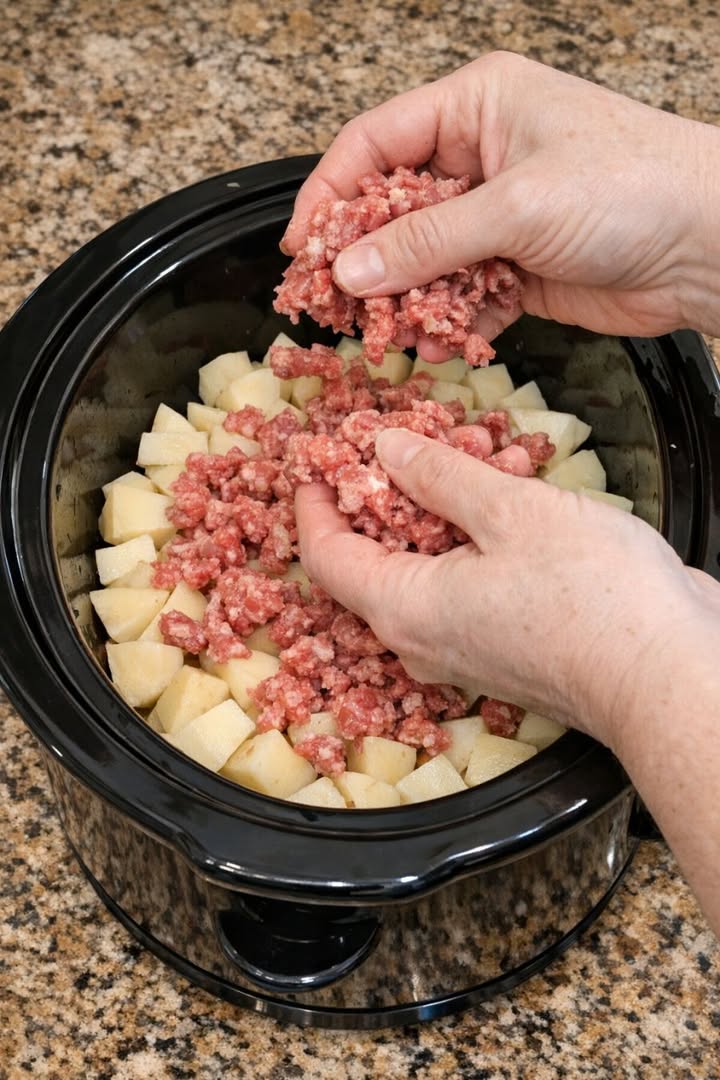
Using clean hands, take the raw ground beef and crumble it directly over the potato and onion layer. Break it into small, loose pieces rather than large chunks so it cooks through evenly and the rendered juices have the maximum chance to flavor the potatoes below. Do not brown the beef first — this is an intentional part of the Amish method, and it works.
Step 5: Mix the Sauce
In a small bowl or large measuring cup, stir together the condensed tomato soup and the beef broth until they are mostly combined. The mixture does not need to be perfectly smooth — just well enough mixed that the soup is not sitting in one solid lump.
Step 6: Pour and Do Not Stir
Pour the tomato soup and broth mixture evenly over the crumbled beef in the slow cooker. Do not stir the layers. Let the liquid find its way down through the beef, onion, and potatoes on its own. This preserves the layering effect that makes the finished stew so cohesive.
Step 7: Cook Low and Slow (or High if Short on Time)
Place the lid on the slow cooker. Cook on LOW for 7–8 hours or on HIGH for approximately 4 hours, until the potatoes are completely tender when pierced with a fork and the ground beef is cooked through. Resist the urge to lift the lid during cooking — every time you do, you release heat and add time to the cook.
Step 8: Stir, Taste, and Finish
When the cooking time is up, gently stir the stew from the bottom up so the potatoes, beef, and sauce all come together. Taste the stew and add additional salt and pepper as needed. Remove the lid and let the stew rest for 5 to 10 minutes — this allows it to thicken slightly before serving.
Pro Tips for the Best Poor Man’s Stew
- Cut potatoes uniformly. Aim for consistent 1-inch pieces so that no potato is mushy while another is still firm. Uneven cuts are the most common reason for uneven results.
- Use 80–85% lean ground beef. The fat content matters here. Leaner beef can make the stew feel dry, while 80–85% lean provides the right amount of rendered fat to flavor the potatoes and enrich the sauce. If you use 90% lean, consider stirring in a tablespoon of butter at the end.
- Do not skip the resting period. That final 5–10 minutes with the lid off is what takes the stew from brothy to properly sauced. Do not rush it.
- Skim excess fat if needed. If you see a noticeable layer of fat floating on top after cooking, use a large spoon to skim it off before stirring and serving.
- Season in layers. The salt and pepper added to the potato and onion layer matters. Season again at the end after stirring — taste as you go.
- Add carrots for color and sweetness. One or two chopped carrots tucked on top of the potatoes (under the beef layer) add a pleasant sweetness and a pop of color without changing the character of the dish.
- Stretch it for a bigger crowd. Add an extra potato or two and a splash more broth. The recipe scales generously without any other adjustments.
Variations Worth Trying
- Milder tomato flavor: Replace half of the condensed tomato soup with additional beef broth for a less tomato-forward, more purely beefy stew.
- Cheesy version: Ladle the stew into bowls and top each serving with a small handful of shredded sharp cheddar cheese. It melts beautifully and adds a rich, creamy note.
- Richer finish: Stir a tablespoon of butter into the finished stew just before serving for extra body and richness.
- Different potatoes: Yukon Gold potatoes give a slightly creamier, more buttery result. Red potatoes hold their shape a little better and add visual appeal. Either works perfectly.
- Convenience swap: If you do not have a fresh onion on hand, substitute two to three tablespoons of dried minced onion — it softens beautifully in the slow cooker and delivers full onion flavor.
Serving Suggestions
Ladle the stew into wide, deep bowls so there is plenty of room for the brothy sauce. A few extra cracks of black pepper over the top at the table never hurts. Here is how to round out the meal the way it was always meant to be served:
- Bread for soaking: A thick slice of buttered white sandwich bread or a wedge of warm cornbread is ideal for soaking up the savory sauce at the bottom of the bowl. This is non-negotiable in a proper farmhouse setting.
- A simple green side: Canned or fresh-cooked green beans, a simple coleslaw, or a crisp lettuce salad with a tangy vinegar dressing brightens the plate and cuts through the richness of the stew.
- Classic farmhouse accompaniments: Set a jar of dill pickles on the table, along with a bowl of applesauce. These were standard on Midwestern farm tables for good reason — the bright acidity of the pickles and the sweet cool of the applesauce balance every bite of the hearty stew perfectly.
- For a complete Sunday dinner feel: Add a simple fruit crisp or a pan of brownies for dessert and you have exactly the kind of meal that keeps families gathered at the table long after the bowls are empty.
How to Store and Reheat
Leftover stew keeps well in an airtight container in the refrigerator for up to 4 days. The flavor actually deepens overnight as everything continues to meld. Reheat gently on the stovetop over medium-low heat, adding a small splash of broth or water if the stew has thickened too much in the fridge. It also reheats well in the microwave in 90-second intervals, stirring between each. This stew freezes successfully for up to 3 months — allow it to cool completely before transferring to freezer-safe containers.
Frequently Asked Questions
Do I have to brown the ground beef before adding it to the slow cooker?
No — and that is one of the great advantages of this recipe. The raw beef crumbles directly into the pot and cooks safely and completely over the slow cooker’s cook time. Browning the meat first would add an extra step and an extra pan to wash without meaningfully improving the final dish.
Can I use a different type of ground meat?
Yes. Ground turkey or ground pork work well as substitutes, though the flavor will be slightly different. Ground turkey in particular produces a leaner, lighter stew — compensate by adding an extra tablespoon of butter at the end or using a full-fat broth.
My potatoes were still firm after 8 hours on LOW. What happened?
Slow cookers vary significantly in actual temperature. If your potatoes are still firm, switch to HIGH and cook for an additional 30–60 minutes with the lid on. Also make sure your potato pieces were cut to 1 inch — larger pieces take considerably longer to cook through.
Can I make this recipe on the stovetop or in the oven instead?
Yes. In a heavy Dutch oven, combine all ingredients as directed, cover tightly, and bake at 325°F (165°C) for approximately 2 hours, or until the potatoes are completely tender and the beef is cooked through. You can also simmer it covered on the stovetop over low heat for about 45–60 minutes, stirring occasionally.
Is this recipe gluten-free?
Most condensed tomato soups contain no gluten, but formulations vary by brand. Check your specific can’s label to confirm. All other ingredients in this recipe are naturally gluten-free.
The Bottom Line: Simple Food Done Right
There is a reason Slow Cooker Amish Poor Man’s Stew has been feeding families for generations — and it has nothing to do with complexity or clever technique. It succeeds because it is honest. Real ingredients. Minimal effort. Maximum comfort. In a world full of recipes that ask a great deal of your time, energy, and pantry, this one asks almost nothing and gives back everything that matters most at the dinner table: warmth, fullness, and the particular satisfaction of a meal that simply works.
Whether you are feeding a hungry family on a tight budget, stocking your freezer with reliable make-ahead meals, or just looking for the kind of supper you can start in the morning and forget about until dinnertime, this stew delivers. It is humble without being boring, simple without being bland, and filling without being heavy. Make it once, and it will earn a permanent place in your regular rotation — just as it has in farmhouse kitchens for as long as anyone can remember.
Give it a try this week. Your slow cooker is ready, your pantry already has most of what you need, and your family will thank you for it.